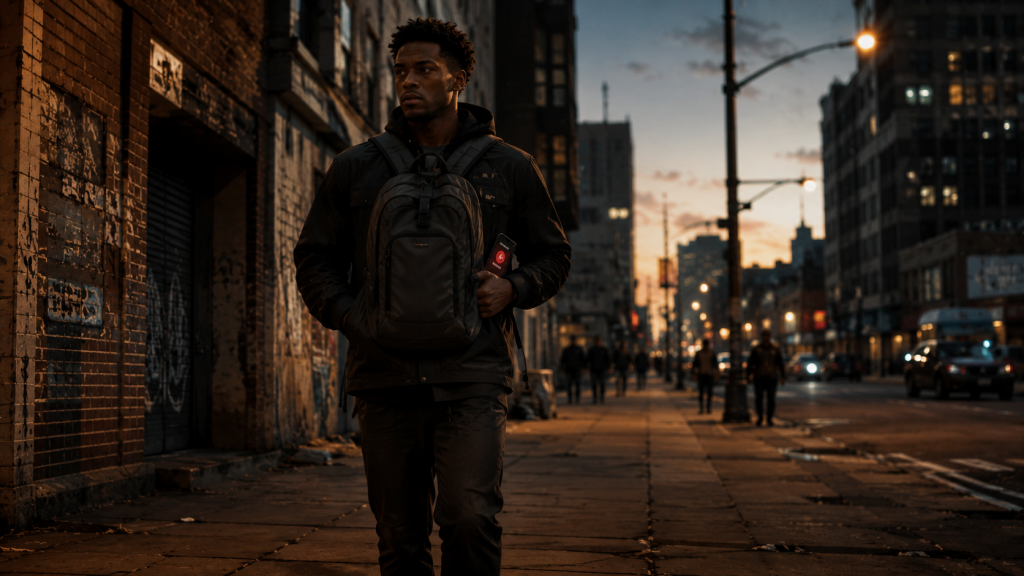
Every city in America has a geography of risk.
Not every block is the same. Not every neighborhood carries the same story. And not every person who ends up in a high crime area chose to be there. Some are visiting family. Some are students at nearby schools. Some are employees, healthcare workers, educators and first responders who show up every day in communities that the rest of the country writes off with a statistic.
This blog is not about judging any neighborhood or the people who call it home. What to know, what to carry and what to do to get home safely.
Preparation is not fear. It is respect for reality.
Understanding America’s Most Dangerous Neighborhoods in 2026
Understanding which areas consistently carry the highest risk and why matters because the history behind these neighborhoods explains a lot about the present reality.
Memphis, Tennessee
Memphis ranks number one on the U.S. News and World Report’s most dangerous cities list with a violent crime rate of approximately 2,501 per 100,000 residents in 2024, nearly 6.5 times the national average. The most common crime is aggravated assault and the murder rate stands at 40.6 per 100,000 residents.
The neighborhoods carrying the heaviest burden are Frayser, Parkway Village-Oakhaven and Whitehaven. These are communities that have experienced decades of economic disinvestment, population loss and concentrated poverty following the collapse of manufacturing industries that once sustained working class Black families in the mid-South.
Memphis saw significant improvement in 2025. The Memphis Police Department reported a 27 percent drop in overall Part I crimes, a 26 percent decrease in murders and a 48 percent drop in carjackings compared to 2024. Progress is real. But the baseline remains one of the highest in the nation.
If you are visiting Memphis: Downtown and Midtown Memphis are significantly safer than the statistical average suggests. Research published in Justice Quarterly found that downtown and tourist districts showed violent crime rates 40 to 70 percent lower than citywide figures. Stick to well-traveled corridors, avoid Frayser and north Memphis after dark and use a safety app before heading anywhere unfamiliar.
Baltimore, Maryland
Baltimore holds the second highest murder rate among large U.S. cities at 34.8 per 100,000 residents and leads all large cities in robbery rates at 573 per 100,000.
Baltimore’s crime challenges trace back to decades of economic disinvestment, the opioid crisis and the systemic inequities that gained national attention following the 2015 death of Freddie Gray in police custody. The uprising that followed exposed deep fractures in the relationship between law enforcement and the communities they were supposed to protect. Baltimore has made measurable progress since then with robberies and auto thefts down year over year by mid-2025 and the homicide clearance rate improving from 40.3 percent in 2020 to 68.2 percent in 2024.
West Baltimore neighborhoods including Sandtown-Winchester carry the highest concentration of violent crime. Central neighborhoods and the Inner Harbor are considerably safer due to foot traffic, visibility and police presence.
If you are visiting Baltimore: The Inner Harbor, Fells Point and Federal Hill are generally safe during daylight and early evening hours. West side neighborhoods carry significantly higher risk after dark. Never leave valuables in your car anywhere in the city.
Detroit, Michigan
Detroit reports a violent crime rate of 20.59 per 1,000 residents and struggles with property crime, carjackings and assaults particularly in the most economically depressed areas.
Detroit’s story is one of the most documented urban decline narratives in American history. The collapse of the auto industry, white flight following the 1967 uprising, decades of municipal mismanagement and population loss from nearly two million to under 700,000 residents left vast swaths of the city without adequate services, jobs or investment.
Crime remains high compared to national averages but both violent and property crime are falling. 2023 marked Detroit’s lowest homicide count in 57 years.
If you are visiting Detroit: Midtown, Corktown and the Riverfront have undergone genuine revitalization and feel significantly safer than older Detroit narratives suggest. East side neighborhoods between 7 Mile and the border carry considerably higher risk. Do not leave anything in your car. Ever.
St. Louis, Missouri
St. Louis has a violent crime rate that far exceeds the national average at 14.70 per 1,000 residents versus approximately 3.81 per 1,000 nationally and has consistently reported one of the highest murder rates per capita in the United States.
Municipal boundaries exclude many suburban areas that other cities include in their population counts, making the per capita rate appear even higher than comparable cities. North St. Louis neighborhoods bear the heaviest burden of violence, driven by decades of racial segregation enforced through redlining and restrictive housing covenants that concentrated poverty and disinvestment in specific zip codes.
Homicide rates fell approximately 22 percent in the first half of 2025, the lowest mid-year murder numbers in more than a decade.
If you are visiting St. Louis: The Gateway Arch area, Clayton and the Central West End are considerably safer. North St. Louis requires extreme caution especially after dark.
Oakland, California
Oakland holds one of the highest violent crime rates among all U.S. cities at approximately 1,925 per 100,000 residents, five times the national average. The city leads the nation in aggravated assault, robbery and motor vehicle theft among mid-sized cities.
Oakland’s crime concentration is rooted in the same historical forces that shaped many American cities. Post-war redlining, urban renewal projects that destroyed established Black neighborhoods, the crack cocaine epidemic of the 1980s and chronic underfunding of schools and community services left East Oakland in particular with few economic options and significant gang infrastructure.
Overall violent crime was down 25 percent in 2025 per NBC Bay Area. The property crime situation remains serious.
If you are visiting Oakland: Rockridge, Temescal and the Lake Merritt area are generally comfortable for visitors. East Oakland requires significant caution. As one longtime Oakland resident put it, treat car break-ins as a cost of living line item. Do not leave anything in your car, ever. Literally ever.
Birmingham, Alabama
Birmingham’s violent crime rate of 1,683 per 100,000 and property crime rate of 3,964 per 100,000 place it consistently among the most dangerous mid-sized cities in America. The burden falls hardest on working class neighborhoods that can least afford the human and economic costs of persistent violence.
Birmingham’s history is inseparable from its role as a center of the Civil Rights movement and the violent resistance that met it. The 16th Street Baptist Church bombing in 1963, Bull Connor’s fire hoses and the systematic economic exclusion of Black residents from opportunity created wounds that have never fully healed. Decades of population decline and industrial collapse left the city with concentrated poverty in neighborhoods that were already vulnerable.
If you are visiting Birmingham: Downtown and the Southside area are reasonably safe. The neighborhoods north and west of downtown require much greater caution especially after dark.
Before You Go: What to Consider Before Visiting a High Crime Area
Research does not take long and it can change everything.
Use crime mapping tools before you arrive. CrimeGrade.org, NeighborhoodScout and local police department crime maps all give block level crime data that is far more useful than citywide statistics. A city with a high average crime rate may have specific corridors that are perfectly manageable. Know which one you are going to before you get there.
Tell someone exactly where you are going. Before entering any unfamiliar area share your full itinerary with a trusted contact. Where you are going, what route you are taking, how long you expect to be there and when they should expect to hear from you. Most people skip this entirely. Do not.
Plan your transportation in advance. Getting lost in an unfamiliar high crime area multiplies your risk. Download offline maps before you go. Know your route before you need to navigate it. Research your parking location too.
Dress down. Expensive jewelry, visible designer items and tourist gear mark you as a target for opportunistic crime. Dress simply. Keep phones and wallets in inside pockets. Carry only what you need.
Save the local emergency number and the nearest hospital in your phone before you arrive. In an unfamiliar area you may not have time to search for this under pressure.
How to Stay Safe While You Are There
Keep your head up. Most people underestimate how much attention they surrender to their phones. Make note of who is around you. Trust your instincts. If something feels wrong it probably is.
Move with purpose. People who look like they know where they are going are significantly less attractive targets than people who look lost. Even if you are not entirely sure where you are, move like you are.
Stay on busier streets with foot traffic and good lighting. Shortcuts through alleys, parking structures or empty lots add risk for the sake of two minutes. Never worth it.
Keep your phone in your pocket when you are not using it. Do not count cash in public. Do not wear jewelry that draws attention. Keep your car keys in your hand rather than fumbling for them when you reach your vehicle.
Travel in groups when possible. Groups are significantly less attractive targets than individuals.
Stay sober. Impaired judgment and slower reaction time are serious liabilities in high risk environments. If you are going to drink, do it somewhere you have researched and arrange your transportation before you start.
Your Number One Safety Tool: A Safety App Before Anything Else
Before any physical preparation, before route planning, before anything else on this list, set up a safety app with your trusted contacts already loaded.
Here is why.
In a genuine emergency your brain does not perform the way it does right now reading this. Your working memory narrows. Your fine motor control decreases. Actions that take two seconds when calm take twenty seconds when you are scared. Searching for a contact, waiting for a call to connect and explaining your situation while something is actively happening is a process that falls apart under real pressure.
NauNauSOS eliminates all of those steps. Before you enter any high risk area, confirm your trusted contacts are set up. The moment anything feels wrong, one tap sends an instant alert to every person on your list simultaneously. They know where you last were. They can call 911 on your behalf. They can start moving toward you before you have finished processing what is happening.
Set it up before you go anywhere unfamiliar. Add the people who will respond immediately.
Every neighborhood on this list is home to real people who love their communities, are raising families, building businesses and working toward something better every day. High crime statistics do not define the full character of any place or its people.
What they do define is the level of preparation a visitor needs before arriving. Respect the reality. Prepare honestly. Make sure someone always knows where you are.
Download NauNauSOS free today.
NauNauSOS. Built for students. Trusted by parents.