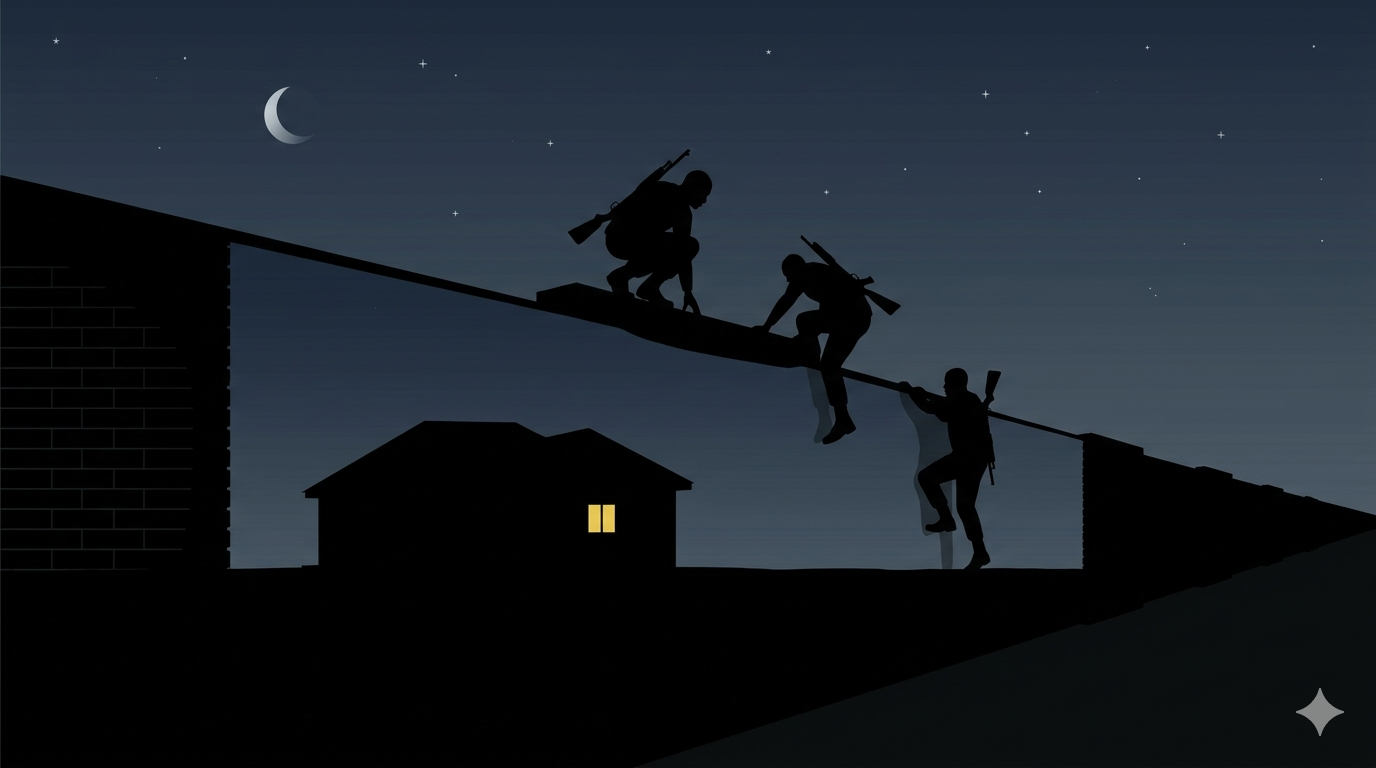
A Sad Children’s Day
A school morning in Nigeria still begins quietly. Uniforms dry on fences overnight. Mothers tie headscarves before dawn. Fathers hurry children toward buses and warn them not to be late. Small shoes kick dust across village roads. Children laugh before assembly.
Then the phone rings. Rumours spread. Parents run toward school gates with fear rising in their throats.
Across parts of Nigeria, especially in the north, many families no longer experience peace when their children leave for school. They just wait. They wait for afternoon pickup, for confirmation, or for news that their sons and daughters are still alive. This fear is growing again.
Only days ago, Nigeria woke up to fresh reports of school attacks and abductions. In Oyo State, gunmen stormed schools in Oriire Local Government Area, abducting students and teachers during coordinated attacks that left communities shaken and grieving. Reports of murdered educators and terrified pupils spread rapidly across the country.
The pain feels familiar. Nigerians have seen this before. Again and again.
A Country Still Haunted by 2025
Many Nigerians hoped the horrors of late 2025 would change things. Instead, those events became another chapter in a tragedy that refuses to end.
On November 18, 2025, armed men attacked the Government Girls Comprehensive Secondary School in Maga, Kebbi State. Schoolgirls were dragged away during the raid while staff members tried to resist. One school official died trying to protect students.
Three days later, something even larger happened. Gunmen stormed St. Mary’s Catholic Primary and Secondary School in Papiri, Niger State. They took 303 students and 12 teachers. It was one of the largest school kidnappings in Nigerian history.
Armed men dragged five-year-old children into forests. These children still needed help buttoning uniforms. Suddenly they were sleeping outdoors under armed guard.
Some escaped days later by running through bushes and villages alone. Others stayed in captivity for weeks. The released children later described nights lit by solar lamps. The kidnappers switched them off whenever military aircraft flew overhead. Food was scarce. Fear was constant. When the final group came home before Christmas, many were weak and broken.
Nigeria moved on quickly. The families did not.
The Chibok Shadow Never Left
Every new school kidnapping reopens an old wound. In April 2014, Boko Haram abducted 276 girls from Government Girls Secondary School in Chibok, Borno State. The world reacted with outrage. “Bring Back Our Girls” became a global cry.
Twelve years later, Nigerian parents ask the same terrifying question every day: Will my child return home from school?
At least 1,799 students have been seized in major school abductions since Chibok. Some escaped. Some were rescued. Some returned carrying heavy trauma. Others remain missing. The kidnappings changed how entire communities think about education. In many rural areas, school carries massive risk. That ruins the future of any nation.
Why Schools Keep Becoming Targets
The attackers understand something cruel and effective. Children create panic faster than anything else.
When armed groups kidnap students, communities collapse within hours. Parents become desperate. Governments face immediate pressure. Ransom negotiations begin quietly behind closed doors. Fear spreads from one village to the next.
Schools remain unprotected in many parts of Nigeria. Rural communities lack security infrastructure, emergency communication systems, or rapid-response protection. Some schools still rely on unarmed guards standing against heavily armed men. The setup is completely unequal.
Groups linked to Boko Haram, Ansaru, and heavily armed bandit networks continue operating across northern Nigeria with alarming confidence. Security analysts warn that kidnapping is an economic enterprise and a weapon used to cause chaos. Ordinary families pay the price.
Nigeria Cannot Continue Like This
Every fresh kidnapping exposes the same truth. Condemnations do not protect children. Press statements do not stop armed men from entering school compounds at night.
Nigeria needs stronger rural school protection systems. The country needs trained emergency response units, better intelligence coordination, and real accountability when attacks happen. Communities need working communication networks to raise alerts before situations spiral out of control.
Parents also need practical ways to stay connected to their children during emergencies. This is why platforms like NauNauSOS matter. No technology can solve Nigeria’s security crisis on its own, but direct emergency communication makes a difference when panic begins and every second matters. Survival can begin with one alert reaching the right person fast enough.
These Are Children, Not Statistics
Behind every number is a real child.
A child who borrowed pencils from classmates. A child who argued about football during break time. A child who dreamed of becoming a doctor, nurse, pilot, or teacher. A child whose mother waited at the gate expecting them home before sunset.
These children did not walk into battlefields. They went to school. That makes this crisis unbearable.
Across Nigeria tonight, some parents will stay awake listening for phone calls. Some children will sleep with fear they are too young to carry. Some classrooms will remain half empty because families no longer believe education is safe. Tomorrow morning, another mother will watch her child leave for school and pretend not to be afraid.
Every Nigerian child deserves more than survival. Every child deserves to learn without fear. Every child deserves to come home.