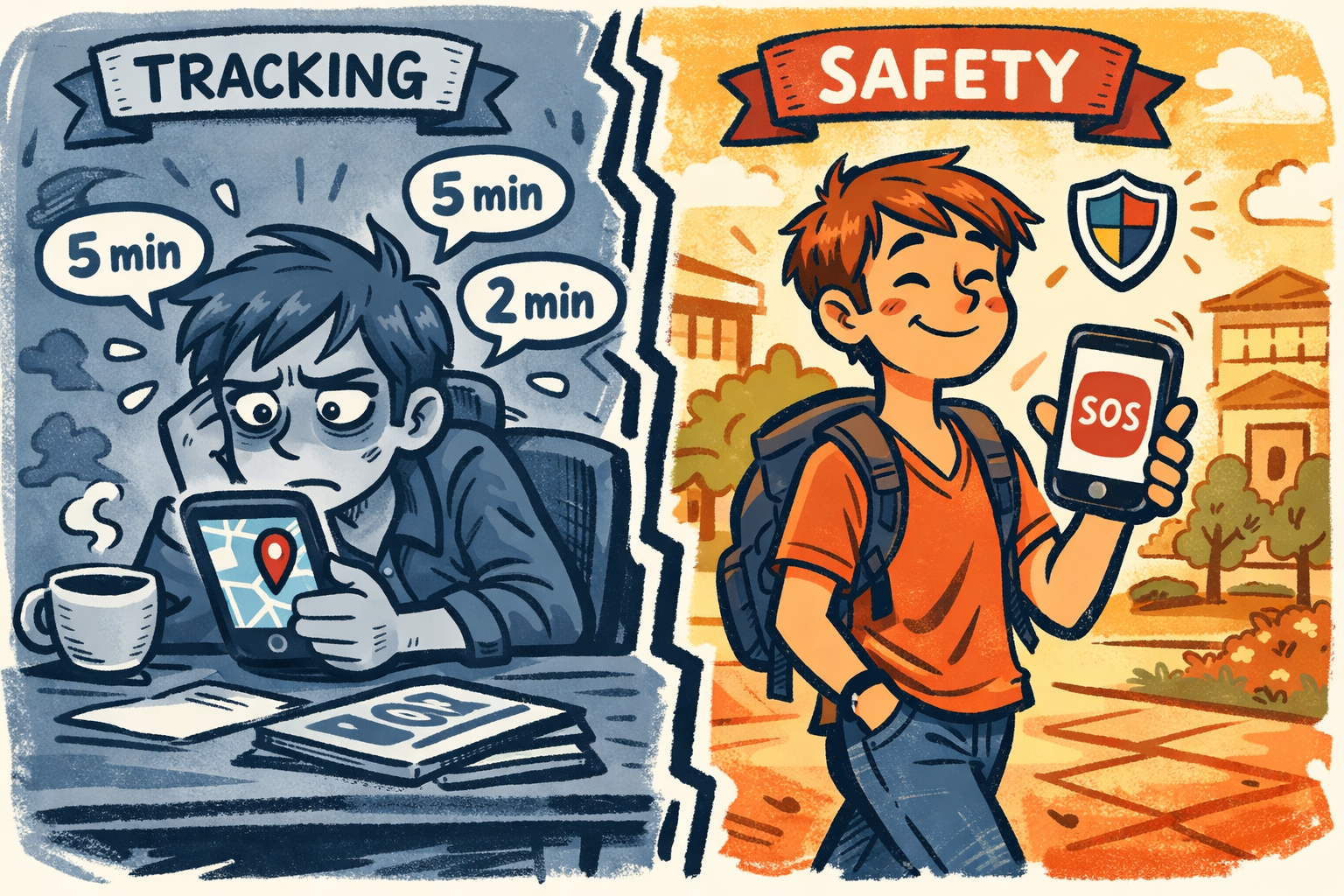
Raising children today can feel like walking a gentle line between wanting them to explore the world and wanting to protect them from every possible danger. Parents often tell me that their minds are always scanning, always checking, always trying to stay one step ahead. If you feel that way too, you are not alone. Caring deeply creates a certain kind of vigilance that can be exhausting, yet it comes from love.
Safety education is about awareness, confidence, and giving your child the tools to navigate everyday spaces with a sense of security. Imagine your child happily running toward school, not anxious, not unsure, but feeling prepared because they know what to do in different situations.
Many parents now teach their kids how to use simple safety apps. It is a quiet practice that offers peace of mind, especially when kids walk to school, visit friends, or explore the neighborhood. It is another layer of reassurance in a busy world.
What Are Safety Rules for Kids and Why Do They Matter
Safety rules help children understand how to protect themselves in a calm and age-appropriate way. They give structure to situations that can sometimes feel unpredictable. When kids know what to do, they feel more confident.
Imagine your child walking into school feeling ready because you have already practiced simple safety habits together. They know who to approach if something feels uncomfortable. They know how to call you. They know what to do if they feel lost. Preparation takes the fear out of the unknown and replaces it with steady confidence.
Safety rules are not restrictions. They are gentle guardrails that help your child move through the world with more independence and less worry.
Key Safety Tips Every Parent Should Teach
1. Stranger Awareness
Stranger awareness is about teaching children how to identify safe adults, not about scaring them. You can explain that most people are kind, but kids should know what to do if someone they do not know approaches them. Safe adults are people in uniforms, teachers, security guards, or staff members at public places.
Teach your child simple boundaries such as stepping back if they feel unsure, saying no with a strong voice, and walking toward a trusted adult. It is about clarity, not fear.
2. Park and Playground Safety
Parks are wonderful spaces for children to explore. Still, it helps to teach them how to move around safely. Explain the importance of staying within sight, avoiding areas that feel too crowded, and knowing how to ask for help from another parent or a playground attendant.
Imagine your child at the park, trying a new slide and feeling a little overwhelmed. If they know how to look around for safe adults or walk back to you calmly, that moment becomes manageable instead of scary.
3. Home Safety
Home is where children feel safest, yet it is also where innocent accidents can happen. Teach your child which items they should never touch, like cleaning products, sharp objects, or appliances. Help them understand safe rooms, which doors stay closed, and why they should not open the front door without an adult.
These small habits give them a sense of responsibility without putting pressure on them.
People Also Read:5 Things to Consider When Choosing Your Emergency Contact Person
4. School Safety
Children spend many hours each week at school, so basic safety rules help them feel secure. Teach them to walk in groups, when possible, stay aware of their belongings, and talk to a teacher if something feels uncomfortable.
Remind them that it is always okay to ask for help. Imagine your child walking between classrooms feeling more grounded because they know the routines and understand how to reach out if they need support.
Public Places Safety
Busy environments can overwhelm young children. Teach them to stay close to you, remember your phone number, and know what to do if they feel lost. Practice calm phrases like, “If you cannot find me, walk to a staff member and say, I need help.”
These simple scripts build courage and reduce anxiety during outings.
Teaching Kids to Use Safety Apps with Confidence
Introducing safety apps to kids can be simple and positive. Many families use them now, especially when children start attending events, school activities, or playdates independently. It is becoming as normal as teaching them how to dial your number.
Explain that a safety app does not mean you do not trust them. Instead, it is a shared tool that keeps everyone connected.
Imagine your child walking to school while your phone quietly shows you that they arrived safely. It gives both of you quiet comfort.
You can introduce NauNauSOS as an easy option for kids. It includes:
• Follow Me for short trips
• Background location sharing
• An SOS alert for emergencies
• Trusted contacts who can support your child
Present the app as something empowering. Kids often feel proud knowing they can reach you anytime.
Download For Android & iOS Here
How to Teach Kids Without Fear
Children learn best when they feel supported, not pressured. Use simple language, practice scenarios through gentle conversation, and let your child ask questions. Avoid overwhelming them with too many instructions at once.
Focus on confidence. Safety becomes natural when it is taught with patience. Remind your child that preparation helps them enjoy the world more freely.
Conclusion
Parenting is a long journey filled with decisions, emotions, and endless care. You are already doing so much, and your effort matters. Teaching your child these safety habits does not require perfection. It only needs consistency, love, and small steps.
By giving your child these tools, you are giving them confidence. By staying connected, you are giving yourself peace of mind. And if you want an added layer of support, NauNauSOS can help your family stay safely connected.
Your child deserves to explore the world with joy. You deserve to feel reassured as they grow.