It was a Tuesday.
Not a Friday night. Not after a party. Not the kind of evening that shows up in the stories parents worry about when they send their kids to college.
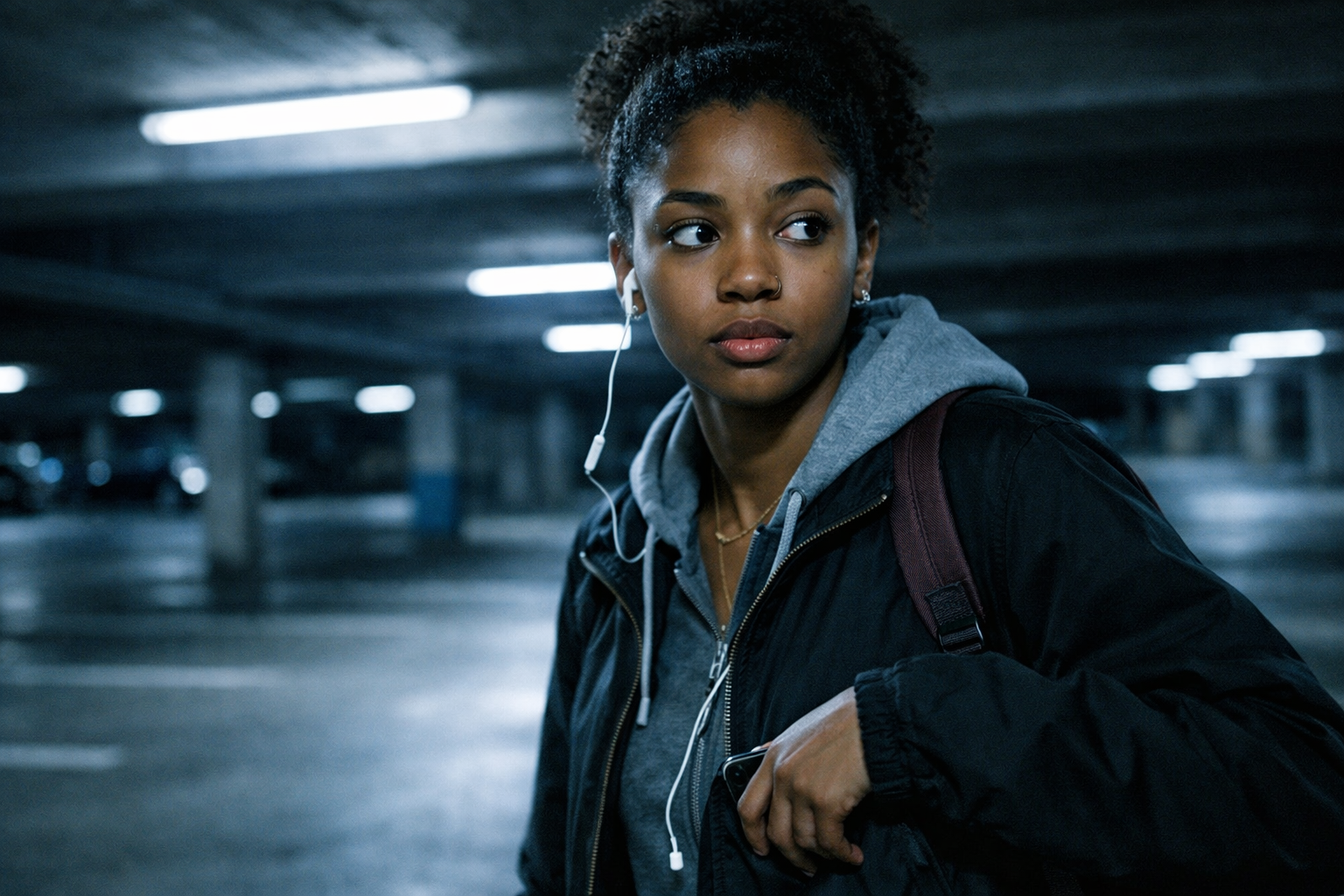
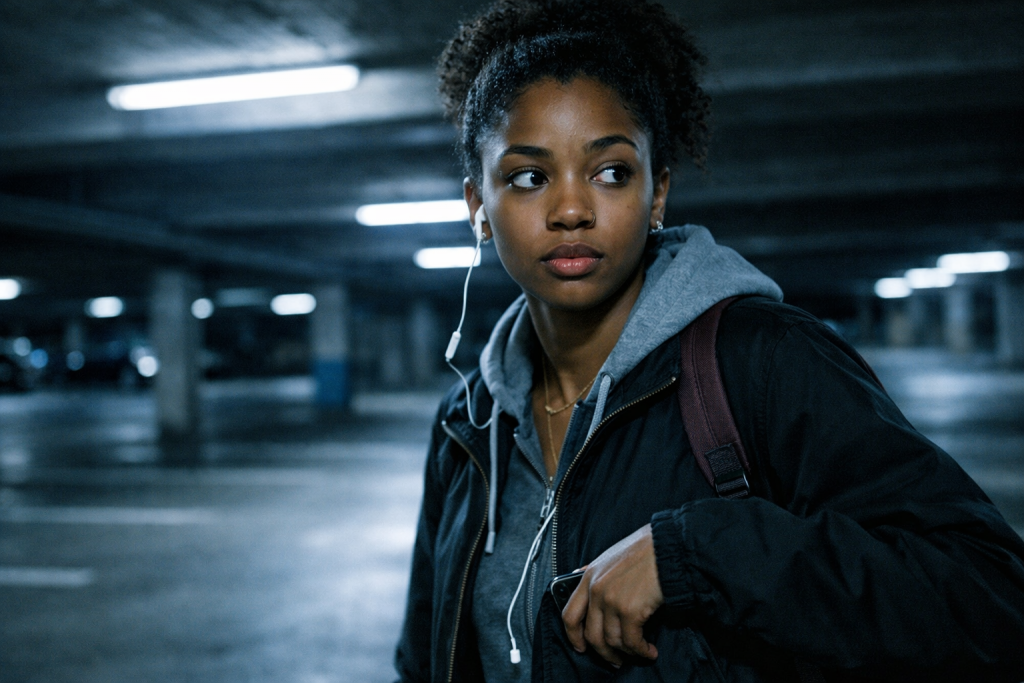
Just a regular Tuesday at 11:07 PM and Amara was walking back from the library.
She had her phone. She had her earbuds in. She had the route memorized because she had walked it a hundred times since September. The path from the library to her dorm cut through the east side of campus, past the science building and around the back of the parking structure. Usually there were other students around. That night there were not.
She noticed him about halfway through the parking structure. A man she did not recognize, walking slowly, not in any particular direction, watching her.
She pulled out one earbud. She kept walking. Her heart rate went up. She thought about calling someone but was not sure who. She thought about texting her roommate but that would mean stopping and looking down at her phone. She thought about 911 but told herself she was probably overreacting.
She made it to her dorm. She was okay.
But for three long minutes in that parking structure, she was completely on her own with no fast way to reach anyone.
That is the story she told her mom the next morning. And the first thing her mom asked was why she did not have an emergency app on her phone.
Amara did not have an answer.
This Is Not a Rare Story. It Is an Everyday One.
A vast majority of female students are fearful of walking alone at night. Many male students are too, although they may be less likely to admit it.
That fear is not irrational. It is a reasonable response to a real environment. Female and non-binary students regardless of generation status are consistently worried about sexual assault, harassment and gender-based violence. Walking alone at night and navigating unfamiliar environments amplify these fears consistently.
And it is not just about crime. Being away from family and trusted support systems was a significant source of anxiety especially for first-generation students. Women were more likely to express concerns about being alone while navigating new environments.
One first-generation female student described it this way. “I would be alone away from home. Just knowing that anything could happen and I would not have that support system to call on.”
That feeling, of being alone without a fast line to the people who would drop everything for you, is exactly what NauNauSOS was built to solve.
What Amara Wished She Had In That Parking Structure
Here is the thing about being in a situation that feels wrong. Your brain does not slow down and think clearly. It speeds up and narrows. Every option feels complicated. Every action requires a decision you are not prepared to make under pressure.
Calling someone means finding their number, waiting for it to ring, hoping they pick up and then explaining what is happening in real time while trying to keep moving and appear calm.
Texting means stopping, looking down, unlocking your phone and typing something coherent while your hands are shaking.
Dialing 911 means deciding whether what you are experiencing is serious enough to warrant that call. And in a moment of uncertainty most students hesitate on that decision for too long.
What Amara wished she had was simpler than any of those options.
She wished she had one tap that immediately told the people who love her most that something felt wrong and she needed them right now. No words required. No waiting. No decision to make under pressure. Just one action that meant help is already on the way.
That is NauNauSOS.
What One Tap Actually Does in That Moment
When a student taps SOS on NauNauSOS, an instant alert goes out to every person on their trusted contacts list simultaneously. A parent. A roommate. A close friend. Whoever the student chose when they were calm and had time to think.
Those contacts get notified immediately. They know their person needs them right now. They can respond, call back, start moving, alert campus security or call 911 on the student’s behalf. All of that gets set in motion with one tap that took less than two seconds.
No searching. No typing. No explaining. No deciding whether the situation is serious enough to bother someone.
Campus safety experts consistently say trust your instincts. If something does not feel right it probably is not right. And you may not be able to put your finger on what exactly it is.
NauNauSOS is what you do with that instinct. You tap SOS and let the people who love you decide what to do next. You keep moving. You stay focused. You do not have to figure it out alone.
The Problem With Campus Safety Resources Alone
Most campuses do have safety resources in place. Blue light emergency phones, campus escort services, safe ride shuttles and designated well-lit paths are available at schools across the country.
Those resources matter. They genuinely do. But they all share the same limitation that Amara ran into on a Tuesday night in the parking structure.
They require you to know exactly where they are. They require you to have enough time and presence of mind to reach them. And they require a level of calm decision-making that most people do not have access to in the first thirty seconds of feeling unsafe.
Students at the University of Michigan organized a petition arguing that poor lighting on campus directly affected their ability to study and feel safe at night, with one student writing that she found herself walking home earlier than she wanted from the library because of poor lighting.
Campus infrastructure improves slowly. Your student needs something that works right now, on the path they are already walking, with the phone that is already in their hand.
What Amara’s Mom Did the Morning After
She asked Amara to download NauNauSOS together on their next call.
They added each other as trusted contacts. Amara added her roommate too. They walked through what happens when SOS is tapped. Amara’s mom made sure she understood that if that alert ever came through she would pick up immediately no matter what time it was.
The whole conversation took less than ten minutes.
Now every time Amara walks back from the library, NauNauSOS is in her pocket. Not because she is scared. Because she is prepared. And there is a big difference between those two things.
Prepared means she walks the same route she has always walked. She still puts her earbuds in. She still stays out as late as she needs to for studying.
She just knows that if anything ever feels wrong again, she does not have to figure out what to do in real time. She already made that decision. One tap. Her people know instantly.
This Is the Conversation Most Families Have Too Late
The conversation Amara and her mom had should happen before move-in day. Not after a Tuesday night parking structure story. Not after a close call. Before the first late night walk ever happens.
If you have a college student and you have not had this conversation yet, this is the moment.
Download NauNauSOS together. Set up trusted contacts while you are both calm. Walk through it once. And then let your student go live their college life knowing the plan is already in place.
That is what being prepared actually looks like.
Download NauNauSOS free today on iOS and Android.
NauNauSOS. Built for students. Trusted by parents.