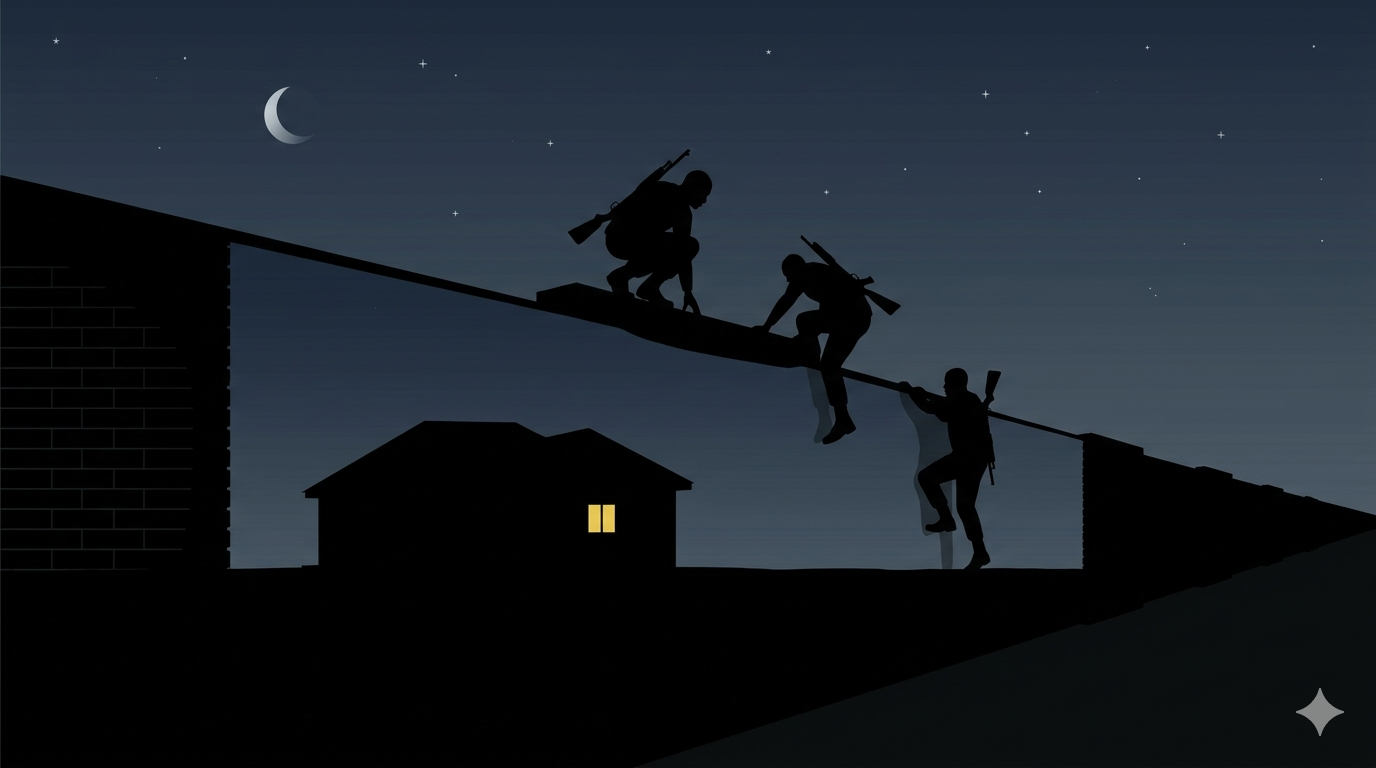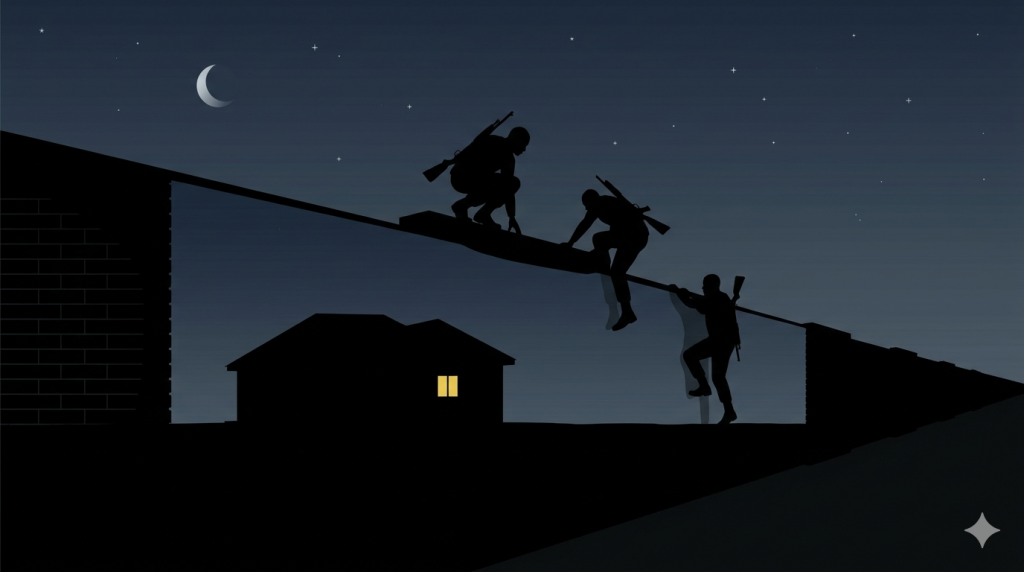
It is 2 AM.
The estate is quiet. The generator cut off at midnight. Most families are asleep behind locked doors and perimeter walls they spent good money building. The security guard at the gate is the only person awake and he is one man against whatever comes through the bush track behind the fence.
Then the fence goes down.
This is not a hypothetical. In the Kubwa area of the Federal Capital Territory, kidnappers invaded Grow Homes Estate along Kuchibiyi, abducted no fewer than nine residents, and came back eight months later. They took three more. A couple and a man, pulled from two separate apartments in the same night. The kidnappers disconnected the alert systems of the houses they attacked before taking their victims. They shot sporadically into the air to scatter the vigilante response. They escaped through the same bush track they had used before.
Nobody was ready the second time either.
The Geography of the New Threat
For years Nigerians understood kidnapping as something that happened on highways, in forests, in the rural North. Those risks are real and ongoing. But since 2024 the operational territory has shifted.
Armed groups have moved their activities into residential suburbs, satellite towns and border communities on the outskirts of Nigeria’s major cities. The calculus is straightforward. Wealthy and middle class targets live in these areas. Security infrastructure is thinner than inside city centers. Bush tracks and farmland provide easy escape routes. Ransom payments from urban families tend to be significantly higher than from rural ones.
For a 20-month period ending in late 2025, roughly 179 residents were kidnapped across Abuja’s border communities alone. In early March 2026, up to 20 people were abducted in a single area over two weeks. In one night, a pastor’s four children aged six to sixteen were among those taken. In January 2024, six siblings were kidnapped alongside their father from their home in Zuma 1 on the outskirts of Bwari town.
In Ibadan, armed men abducted Adeleke Ridwan Olayemi from his home at Alapinnu Community on Ogunmakin Road, later increasing their ransom demand to twenty million naira and threatening to kill him if payment was delayed. On May 19, 2026, unidentified gunmen invaded the Cocoa Research Institute of Nigeria premises in Ibadan and abducted two staff members in broad daylight.
Abduction fears have triggered panic across South-West schools and communities. What was previously a northern problem has spread into the South-West with a speed that has outpaced both community response and government intervention.
How These Attacks Actually Happen
Understanding the pattern is the first step toward defending against it.
Residential kidnappings in Nigerian suburbs follow a recognizable operational pattern that security analysts have documented across multiple incidents.
Pre-attack surveillance. Armed groups conduct reconnaissance on target estates days or weeks before an attack. They identify the number and positioning of security guards, the timing of generator shutdowns, which houses appear most prosperous based on vehicles, satellite dishes and visible assets, and the location of any escape routes through adjacent bush or farmland.
Coordinated entry. Most estate attacks involve groups of between ten and thirty armed men who enter simultaneously from multiple points. This overwhelms security guards and prevents coordinated resistance. The attack on Grow Homes Estate involved over twenty kidnappers who came specifically prepared to neutralize the vigilante response.
Alert system neutralization. In the Grow Homes Estate attack, the kidnappers disconnected the alert systems of target houses before entering. This pattern suggests inside knowledge or pre-attack technical preparation. Families relying solely on estate-level alert infrastructure carry significant vulnerability.
Speed and selectivity. Residential kidnappings are fast. Attackers know which houses they are targeting, move directly to them and exit through predetermined routes. The entire operation from breach to exit typically takes under fifteen minutes. Speed is their greatest advantage against any organized response.
Ransom as the business model. These are not random acts of violence. They are coordinated commercial enterprises. Kidnappers in FCT communities have been documented sending bank account details directly to families to facilitate ransom payments. The professionalization of kidnapping for ransom has made it more systematic, more frequent and more difficult to disrupt.
The Specific Areas Carrying the Highest Risk Right Now
Abuja FCT Border Communities: Kubwa, Bwari, Gwagwalada, Abaji Area Councils and surrounding FCT border communities have seen sustained residential kidnapping activity through 2025 and into 2026. Gunmen operate freely in parts of these areas conducting house-to-house raids and demanding ransoms from vulnerable settlements. The government installed a 460 million dollar CCTV surveillance network financed through a Chinese loan. Kidnappings continued regardless.
Ibadan Outskirts: Communities on the edges of Ibadan including areas around Alapinnu, Ogunmakin Road and research institution campuses have seen kidnapping activity that has startled communities that previously considered themselves safe. Governor Seyi Makinde signed an executive order in 2026 to regulate informal security groups in Oyo State, acknowledging that the formal security apparatus alone is not holding.
Lagos Outer Suburbs: Express kidnapping in outer suburbs including Ikorodu and Epe typically targets Nigerians and has increased in frequency. Victoria Island, Ikoyi, Lekki Phase 1 and Ikeja GRA carry lower risk. Estates further from city centers, particularly those bordering less developed areas, carry significantly higher exposure.
South-West Communities Generally: Abduction fears are now being described as triggering panic across South-West schools and communities, a phrase that would have been unusual to apply to this region two years ago. The threat has moved south faster than the response has.
What Every Nigerian Family Living in a Residential Estate Must Do Now
Have a communication plan that does not depend on estate infrastructure.
The Grow Homes Estate attack specifically targeted alert systems. Families who relied on those systems had no backup when they were cut. Every household needs a personal communication plan that functions independently of estate-level infrastructure. That means every adult in the household has a charged phone with trusted contacts already loaded before they sleep.
Set up NauNauSOS before you need it.
This is the most important practical step on this list and the reason it comes first rather than last.
In the first seconds of a home invasion or kidnapping attempt, the ability to make a call requires unlocking a phone, finding a number, waiting for connection and speaking clearly. None of those steps are reliable when armed men are inside your compound shooting into the air.
NauNauSOS removes every one of those steps. One tap sends an instant alert to every trusted contact on your list simultaneously. Your extended family, your neighbor in the next street, your church security contact, your community WhatsApp admin. Everyone is notified at the same time with no speaking required and no seconds wasted.
Set it up today. Add every person who will respond immediately and already knows your address. Make sure every adult and older child in your household has it on their phone with the same trusted contacts loaded.
Conduct a real security audit of your home.
Walk your perimeter after dark. Look for where a fence can be scaled, where lighting is inadequate, where a determined group of men could breach your compound without being seen from the street. Most estate residents have never done this exercise. Do it this week.
Identify your escape routes from inside your house. If armed men enter your compound, where do you go? Which room offers the most protection? Is there a roof access point? A back exit? Know the answers before 2 AM makes them urgent.
Vary your routines deliberately.
Kidnapping operations that target specific households are almost always preceded by observation of household routines. Generator timing, vehicle movement patterns, arrival and departure times, the number of people who sleep in the house on different nights. Make your household less predictable. Change your generator shutdown time. Vary your return times. These are small habits that raise the cost of surveillance and reduce your targeting profile.
Build genuine community security networks.
No household is protected by its own perimeter alone. The most effective residential security in high-risk areas functions at the community level, with neighbors who communicate in real time, share intelligence about suspicious activity and respond collectively to threats. The bandits operating in Kubwa succeeded in part because individual household security was not coordinated.
Create or join your estate WhatsApp security channel. Share information about suspicious vehicles, unfamiliar faces loitering near entrances and any unusual activity around the fence line. Information shared immediately and widely is one of the cheapest and most effective deterrents available.
Know your local emergency contacts and save them tonight.
Nigerian Police Force Emergency: 112 FCT Police Command: 08032003913 DSS Emergency: 08095555238 Oyo State Police Command: 08031677937 Lagos State Emergency Management Agency: 767 or 08000-LAGOS-1
Save your nearest divisional police station number separately. In an active incident, calling a local commander directly can get a response faster than routing through national numbers.
The Honest Conversation About What the State Can and Cannot Do
The Nigerian government installed a 460 million dollar CCTV network in Abuja. Kidnappings continued. This is not a criticism without context. Surveillance infrastructure and ground response capacity are different problems and Nigeria has significant gaps in the second one regardless of the first.
Families in residential estates on the outskirts of Nigerian cities cannot wait for institutional solutions that have been promised and partially delivered for years without closing the security gap that armed groups continue to exploit.
Personal preparedness, community coordination and communication tools that function independently of infrastructure are the realistic response available to families right now.
Set up NauNauSOS today. Do the perimeter walk tonight. Start the neighborhood security channel this week. These are not complete solutions. They are the realistic difference between a family that had a plan and a family that did not.
Download NauNauSOS free today. Add your trusted contacts before you sleep tonight.
NauNauSOS. Built for students. Trusted by parents. Built for every Nigerian family that deserves to feel safe at home.