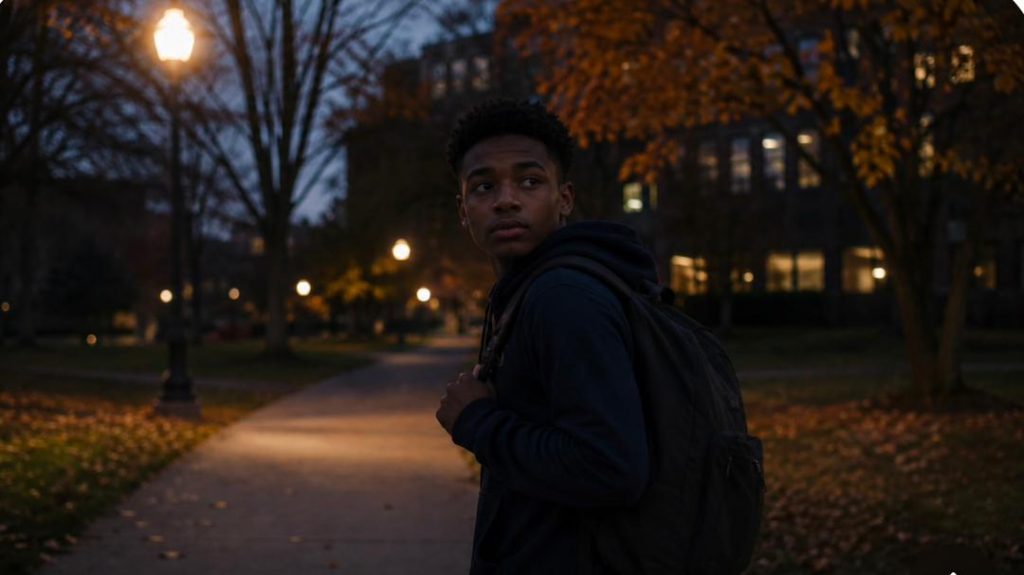
Most people think of a safety app as something you need when walking home late at night.
That is true. But it is only part of the story.
Some of the most critical moments where a safety app makes a life-altering difference have nothing to do with crime. They happen in broad daylight, in dorm rooms, in dining halls, in classrooms, and in moments where a student’s body does something unexpected and nobody around them knows what to do or who to call.
Medical emergencies happen to college students more often than most families realize. And the students who are most vulnerable are often the ones managing a pre-existing condition for the first time without their parents nearby to help.
This blog is about those moments. The ones nobody talks about when they discuss campus safety. And why having one tap that instantly reaches your trusted contacts is not just a crime prevention tool. It is a medical lifeline.
The Reality of Medical Emergencies on Campus
The most common health issues reported by college students include orthopedic injuries, allergic reactions, and stomach bugs, but the health risks that carry the most serious consequences are often the sudden, unpredictable ones.
Students living with medical conditions including seizure disorders, asthma, diabetes, allergic reactions and psychological disabilities may experience flare-ups that require emergency medical intervention while on campus.
What makes these moments particularly dangerous for college students is not the condition itself. It is the context. A student alone in a dorm room at midnight. A student eating at a campus dining hall surrounded by strangers who do not know their medical history. A student studying alone in a library carrel when their blood sugar drops critically.
In every one of those scenarios, the difference between a manageable emergency and a tragedy comes down to one thing. How fast do the right people find out?
Real Medical Emergency Scenarios Where NauNauSOS Changes Everything
These are not hypothetical situations. They are the kinds of medical events that happen to real college students every year.
Scenario 1: The Allergic Reaction at a Campus Event
Food allergy affects up to 11 percent of college-aged students. A first semester college student with a known peanut allergy ate food at a campus event that he did not realize contained peanuts. He sensed he needed epinephrine but his self-injectable epinephrine was in his dorm room. After returning to his dorm room and self-administering epinephrine, his symptoms continued to worsen. The residence staff then took him to the hospital by car. On the way, his symptoms continued to progress and 911 was called. He unfortunately died before arrival at the hospital.
That story is real. And it raises a question that every family with a student who has food allergies should sit with. If that student had been able to tap one button that instantly alerted his trusted contacts, his parents, his roommate, anyone who knew his medical history and where his EpiPen was, would the outcome have been different?
Quite possibly yes.
NauNauSOS gives a student in the early stages of an allergic reaction the ability to alert the people who know their situation immediately, without speaking, without explaining, without navigating a contact list while their throat is beginning to swell.
Scenario 2: A Seizure Alone in a Dorm Room
Students with epilepsy are advised to tell trusted people around them about their condition, describe their usual seizures, and let people know when to call 911 including if a seizure lasts more than five minutes, if there is an injury, if there is trouble breathing, or if the student has trouble waking after the seizure.
But what about the student who has a seizure alone? Before the seizure begins, if they feel the warning signs, a one-tap SOS alert to their trusted contacts means their roommate, their parent or their friend knows immediately that something is happening. They can call 911 on the student’s behalf. They can come to the room. They can alert the RA.
Students with seizure disorders are advised to wear medical ID bracelets and alert devices for times when they are alone. NauNauSOS functions as exactly that kind of active alert system, giving a student a fast way to reach their personal support network the moment they sense something is wrong.
Scenario 3: A Diabetic Crisis in the Library
Blood sugar crashes can come on suddenly and without much warning. A student studying alone in the library who experiences severe hypoglycemia may become confused, disoriented or lose consciousness before they can effectively call for help.
In that scenario, the ability to tap SOS before the confusion fully sets in means someone is already on their way before the student loses the ability to communicate. Their trusted contacts know something is wrong. They can call the library, contact campus EMS or alert someone nearby to check on their friend.
The window between early symptoms and losing the ability to act clearly can be very short. One tap in that window is everything.
Scenario 4: A Severe Asthma Attack Without an Inhaler
Asthma is among the most common medical conditions requiring emergency intervention on college campuses, with difficulty breathing and shortness of breath listed as primary warning signs of a medical emergency requiring immediate response.
A student who leaves their inhaler in their dorm and begins experiencing a severe asthma attack in a classroom building after hours may not have time to explain the situation to a stranger or navigate their phone contacts while struggling to breathe.
One tap on NauNauSOS sends an instant alert. Their parent calls immediately. Their roommate who knows where the inhaler is gets notified. Campus EMS gets called by someone who already knows the student’s name, condition and location because the trusted contact has that information and responds immediately.
Scenario 5: A Mental Health Crisis at 2 AM
In the past year around 14 percent of college students reported suicidal ideation, six percent made suicide plans, and two percent attempted suicide.
A student in a mental health crisis at 2 AM in their dorm room is a medical emergency. Not a security emergency. A medical one. And the barriers to calling someone in that moment are enormous. The energy required to make a phone call and explain what is happening feels impossible. The fear of worrying someone or being judged can be paralyzing.
One tap that simply says I need you right now, no words required, no explanation demanded, no energy the student does not have, is a bridge between the student and the person who will respond with love and without judgment.
NauNauSOS is not a replacement for crisis services. The 988 Lifeline and Crisis Text Line are essential resources that should always be accessible. But for the student who cannot make a call in that moment, one tap to the parent or friend who already knows them is sometimes the first step that makes the next step possible.
Scenario 6: A Fall or Injury in an Isolated Area
A student who falls and injures themselves in a stairwell, a parking structure, or an isolated campus path may be unable to walk, unable to speak clearly or unable to navigate their phone effectively while in pain and disoriented.
A person’s condition can become life threatening on the way to the hospital if emergency response is delayed. Speed of response is directly tied to outcomes in trauma situations.
One tap that immediately alerts trusted contacts who can call 911 with the student’s last known location dramatically reduces the time between injury and medical response.
The Gap Between 911 and Your Trusted People
Here is something worth understanding clearly about medical emergencies specifically.
911 is essential. Always call 911 in a life-threatening situation. But 911 does not know your student. Dispatchers ask questions that take time to answer. They send help to the location but they cannot notify the people who know your student’s medical history, their current medications, their allergies or the specific details that help medical professionals treat them more effectively and faster.
Your student’s trusted contacts know all of that. And when they receive a NauNauSOS alert they can call 911 on their student’s behalf, provide medical history to dispatchers, alert campus health services and be on the phone with their student simultaneously.
That dual response, professional emergency services and personal trusted contacts activated at the same time, is significantly more powerful than either one alone.
Setting It Up for Medical Safety Specifically
If your student manages a medical condition, here is how to set up NauNauSOS specifically for that context.
Add the people who know your student’s medical history as trusted contacts. Make sure those contacts have a note about the student’s condition and what to do when an alert comes through. A simple message shared in advance: if you get an SOS from me it may be a medical episode, call 911 and give them this information, then call campus EMS.
That preparation, done once in advance, means that in the moment when your student cannot speak or think clearly, the people receiving their alert already know exactly what to do.
Safety Is Not Just About Crime. It Is About Being Ready for the Unexpected.
A safety app is not a crime prevention tool. It is a connection tool. A fast, direct, one-tap bridge between a student in any kind of emergency and the people who will respond immediately.
Medical emergencies do not announce themselves. They do not wait for a convenient time or a safe location. They happen in dorm rooms at midnight, in dining halls at noon and in library stairwells on quiet Sunday afternoons.
NauNauSOS is ready for all of those moments. Not just the ones that happen after dark.
Download NauNauSOS free today. Set it up with your medical history in mind. And make sure your trusted contacts know what to do when that alert comes through.
In any medical emergency always call 911 first. Campus Health Services: Check your university website for the direct number. 988 Suicide and Crisis Lifeline: Call or text 988 Crisis Text Line: Text HOME to 741741
NauNauSOS. Built for students. Trusted by parents.